

A good pole barn pad is built on solid ground with the topsoil taken off, fill placed and compacted in layers, and stone on top, at the size and elevation your builder gave you. Most of the trouble with barns later comes from skipping one of those steps or putting the pad in the wrong spot.
Picking the spot before anything gets dug
The location decides more about the finished pad than any other choice. A barn that sits on the high side of the property starts with water moving away from it. One dropped into the low corner of the yard spends its life with water pushing toward the posts. Walk the ground after a hard rain and see where it stands.
Think about how you will get to it, too. A truck delivering trusses, a concrete truck if the floor is getting poured, and whatever you plan to park inside all need a way in that does not cross the well, the sewage system or soft ground. If a drive has to be built to reach the barn, plan it with the pad so both are graded to work together. George looks at all of this when he walks the job for the estimate.
Stripping the topsoil
Topsoil is great for growing grass and poor for holding up a building. It is full of roots and organic matter that break down and settle over time, so it comes off the whole pad area and a little past the edges. It gets stockpiled on site so it can go back around the finished barn for the lawn or the slope, instead of being hauled away and bought back later.
How deep the stripping goes depends on what is underneath. On some lots the black dirt is thin and the subsoil shows up fast. On old farm ground it can run deeper. The point is to get down to firm native soil before building back up. If you want the difference explained, our guide on topsoil versus fill dirt covers why one goes under a building and the other does not.
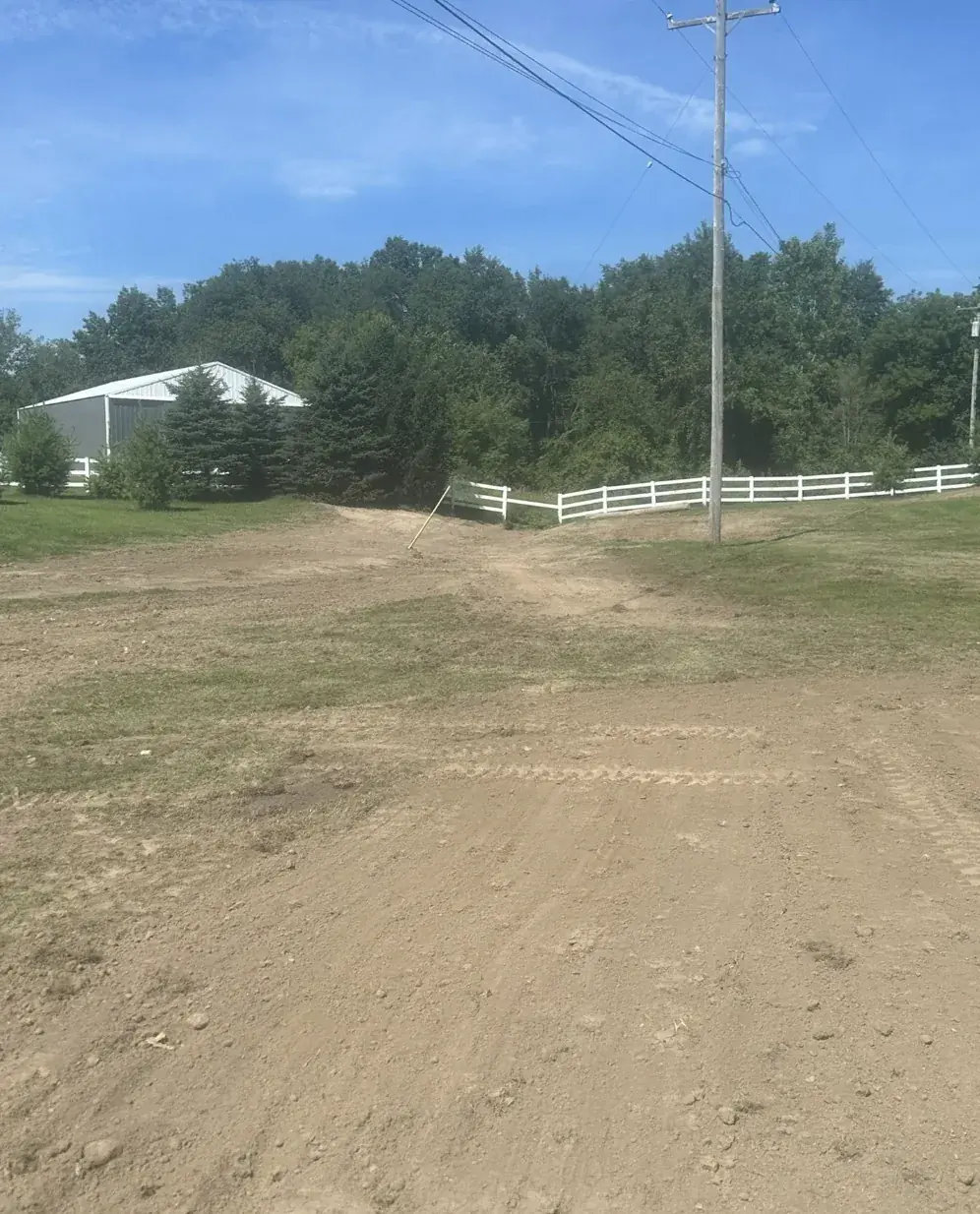
Fill and compaction, a layer at a time
Most pads need to come up above the surrounding grade so water sheds away. That means bringing in fill and placing it in lifts, thin layers that each get compacted before the next goes down. Dumping a big pile and running over the top only packs the surface. The loose material underneath settles later, and that is when slabs crack and posts move.
The fill itself matters. Clean, compactable material holds; clay with a lot of water in it or fill with organic debris mixed in does not compact well and keeps moving. If material has to be trucked in, that is part of the same job through our material hauling service. The pad gets built up to the elevation on your builder's print, not to a guess.
Drainage around the pad
A pad that is level and solid can still fail if water collects around it. The ground beyond the pad edge gets shaped so it falls away from the building in every direction it can, and any low spot that would hold water against the barn gets filled or given a path out.
Plan for the roof as well. A pole barn sheds a lot of water off a big roof onto a narrow strip of ground along each side. If that water has nowhere to go, it soaks in right at the posts. Sometimes the fix is just a good grade. Sometimes it is a swale or a buried line carrying water to an outlet, which is the kind of work covered under drainage solutions. It is far easier to set up now than after the walls are up.
Stone on top and a level finish
The top of the pad is usually a layer of crushed stone, compacted and brought level. Stone drains, spreads the load, and gives the builder a clean, firm surface to lay out posts and pour on. The type and depth of stone should come from your builder or the barn company, because they know what their floor and footing details call for.
Once the stone is down and compacted, the surface gets shot with a laser so the pad is level and at the right elevation from corner to corner. A pad that is off by a little at the corners turns into extra work and extra concrete for the next trade. Getting it right here is what pole barn pad prep is for.
Township permits and paperwork
Rules for accessory buildings and pole barns are set locally, and they differ from one township to the next across St. Clair and Lapeer counties. Before anything is dug, check with your township office or the building department that covers it about building permits, zoning, where on the lot a barn can go, and whether an agricultural use changes anything. Do not assume a barn is exempt because a neighbor's was.
Two other calls belong on the list. Michigan law requires a call to MISS DIG 811 before excavating, so buried lines are marked before the machine starts; our guide on calling MISS DIG before you dig walks through it. And if the work disturbs a larger area or sits close to a lake or stream, a soil erosion permit may be needed from the county. In St. Clair County that office is the county health department, and in Lapeer County it is the Lapeer County Health Department.
The Short Version
- Put the barn on the high side of the property where water already moves away.
- Strip all the topsoil off the pad area and save it for the finish grade.
- Place fill in thin compacted lifts; one big dump settles later.
- Build to the size, elevation and stone spec on your builder's print.
- Check with your township and call MISS DIG 811 before work starts.
Quick Answers
Can a pole barn pad be built on the topsoil that is already there?
It is not a good idea. Topsoil holds roots and organic matter that rot and settle, and a slab or post set on it tends to move. Stripping it off and building up with compactable fill and stone is how a pad stays put.
How high should a pole barn pad sit above the yard?
High enough that water drains away from the building on all sides. The exact elevation comes from your builder or barn company and the lay of your lot. George looks at the grade around the site during the free estimate and builds to the number on your print.
What time of year is good for building a barn pad in Michigan?
Dry stretches make compaction easier and keep trucks from rutting the yard. Spring can be wet, and county roads may carry seasonal weight limits in the thaw, so check the current county road commission notice before trucks are scheduled.
Who do I call to get a pad estimate?
Call Elite Excavating at (989) 702-2426. George walks the site first, looks at where the barn is going and how water moves, and then gives you a price for the whole pad.
See the pole barn pads service or call (989) 702-2426.