

Site prep for a new house runs in a set order: survey and permits first, then clearing, the building pad and a construction drive, with utilities and final grade coming last. Getting the order right keeps trades from waiting on each other and keeps the ground from being torn up twice.
Start with the survey
Before a tree comes down, know where your lines are and where the house will sit. A survey marks the property boundaries, and a site plan shows the house, drive, well, sewage system area, outbuildings and any setbacks your township requires. Clearing the wrong strip or putting the drive on the neighbor's side is an expensive way to find out where the line was.
The site plan also tells the excavator what has to be cleared, where topsoil can be stockpiled, how high the pad needs to be, and where water will go. If the lot is wooded, mark the trees you want to keep. It is far easier to protect a tree that is flagged than to replace one that was in the way.
Township and county permits
A new house on a rural lot usually involves more than one office. The township or the building department that covers it handles building permits and zoning. The county health department is typically involved with the well and on-site sewage system. A new driveway onto a county road generally needs a permit from the county road commission, and our guide on driveway culvert permits covers that side.
Requirements are not the same in every township, so ask each office directly what applies to your lot and in what order. Your builder will usually be pulling the building permit, but the site work has to match what was approved, so share the plans with your excavator early. Never assume a step can be skipped because it was not needed somewhere else.
Soil erosion permits for larger disturbance
Michigan's soil erosion and sedimentation control rules come from Part 91 of the state environmental law, administered by EGLE. EGLE says a permit is generally required for earth change that disturbs one or more acres, or that is within 500 feet of a lake or stream. Counties appoint an enforcing agency to review plans and issue those permits, and some local governments run their own program.
In St. Clair County and Lapeer County the county enforcing agency is the county health department. In Macomb County it is the Department of Public Works, and Sterling Heights and St. Clair Shores run their own programs. Ask the right office early, because silt fence and other controls need to go in before the clearing starts, not after.
Clearing, then the pad
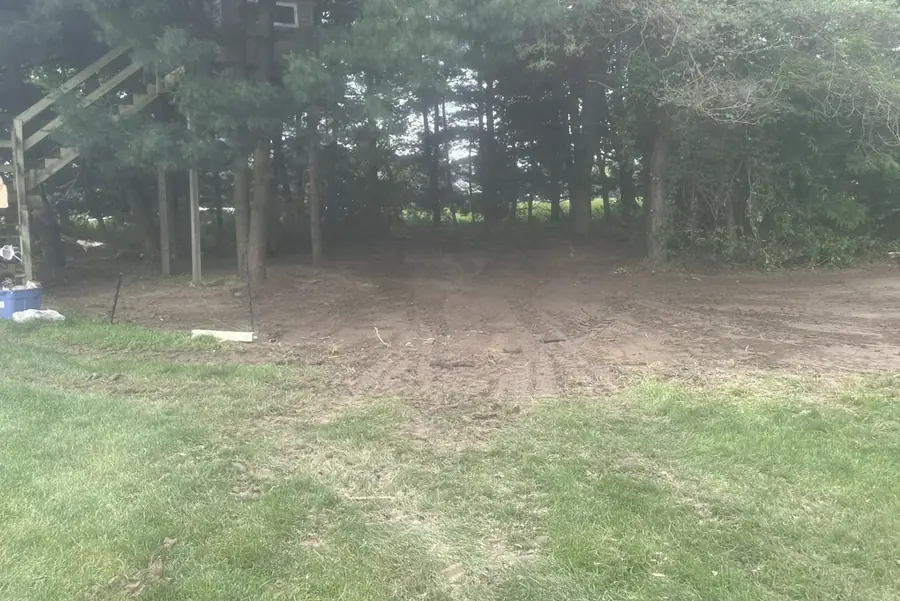
Once the paperwork is in place and MISS DIG 811 has been called, the clearing starts. Trees, brush and stumps come out of the house footprint, the drive route and the work area around them. Debris is hauled off or mulched, depending on what the lot and your plans allow. Topsoil is stripped and stockpiled so it can come back for the yard.
Then the building pad gets built: subsoil cut or filled to the elevation on the plan, fill placed and compacted in lifts, and the surface left firm and at grade for the foundation crew. This is the core of Elite's land clearing and site preparation work, and it is the part the rest of the house depends on.
The construction drive
A house build sends a lot of heavy trucks onto the lot: concrete, lumber, trusses, block, roofing. A stone construction drive put in early keeps those trucks out of the mud, keeps them from tracking clay onto the road, and gives everyone a firm place to unload.
Often the construction drive becomes the base of the finished drive later, so it pays to put it where the permanent driveway will go and build it properly from the start. If a culvert is needed at the road ditch, that is usually settled before the drive goes in. Elite's driveway installation service covers the drive, and our guide on gravel driveway cost explains what moves that price.
Utilities by others, then final grade
Electric, gas, phone and internet service lines, along with well and sewage system work, are usually handled by the utility companies and the trades your builder hires. Their schedule fits between the pad and the final grade, and it helps to leave the site open enough for their equipment to get in.
Final grade is the last piece of dirt work. Once the house is up and the trenches are backfilled, the stockpiled topsoil goes back, the yard is shaped so water runs away from the foundation on every side, and the lot is ready for seed or sod. This is where the earlier choices about pad height and drainage pay off. Call Elite at (989) 702-2426 to have George walk the lot and lay out the order of work.
The Short Version
- Get a survey and site plan before any clearing.
- Ask the township, county health department and road commission what each requires.
- EGLE says a soil erosion permit is generally required for an acre or more of disturbance or work within 500 feet of a lake or stream.
- Clear, build the pad, then put in a stone construction drive.
- Final grade comes last, after utilities and backfill.
Quick Answers
Who issues soil erosion permits in St. Clair County?
EGLE lists the St. Clair County Health Department as the county enforcing agency for Part 91 soil erosion and sedimentation control. Contact them to confirm whether your project needs a permit.
Should the driveway go in before the house is built?
A stone construction drive usually goes in right after the pad, so trucks can reach the site without rutting the lot. It is often built where the finished drive will go and finished after the heavy work is done.
Does the excavator handle the well and sewage system?
Those are usually separate trades arranged by you or your builder, along with the utility service lines. The site prep is planned around them so their work fits between the pad and the final grade.
How early should I contact an excavator for a new home?
As soon as you have a lot and a rough plan. George can walk it, point out clearing, drainage and access questions, and help you line up the order of work. Call (989) 702-2426.
See the land clearing & site prep service or call (989) 702-2426.