

Topsoil is the dark, organic upper layer that grows grass and plants, and fill dirt is the subsoil used to raise grade and build a firm base. Use fill to build up and support, then finish with a layer of topsoil where you want something to grow.
What topsoil is
Topsoil is the upper layer of soil, dark with organic matter from roots and decayed plant material. That organic content is what holds moisture and nutrients and lets grass, gardens and shrubs take root. It is also why topsoil is loose and spongy. The same qualities that make it good for growing make it poor for supporting weight: it compresses, it settles as the organic matter breaks down, and it holds water.
Screened topsoil has been run through a screen to take out stones, roots, sticks and clumps. It spreads evenly, rakes smooth and makes a clean seedbed, which is why it is the usual choice for finishing a lawn after grading. Unscreened topsoil costs less to produce but can be lumpy and full of debris that has to be picked out before seeding.
What fill dirt is
Fill dirt is subsoil, the mineral layer below the topsoil, with little or no organic material. Depending on where it comes from it may be clay, sand, or a mix. Because it has little to rot away, fill compacts into a stable mass and stays where it is put, which is exactly what you want under a structure or a driveway.
Fill is used to raise low ground, fill holes and old basements, build up grade around a new foundation so water runs away, and form the core of a pad. It is not meant to grow anything, so a yard finished in bare fill will struggle to hold grass. The order is almost always the same: fill to build the shape, topsoil on top to grow.
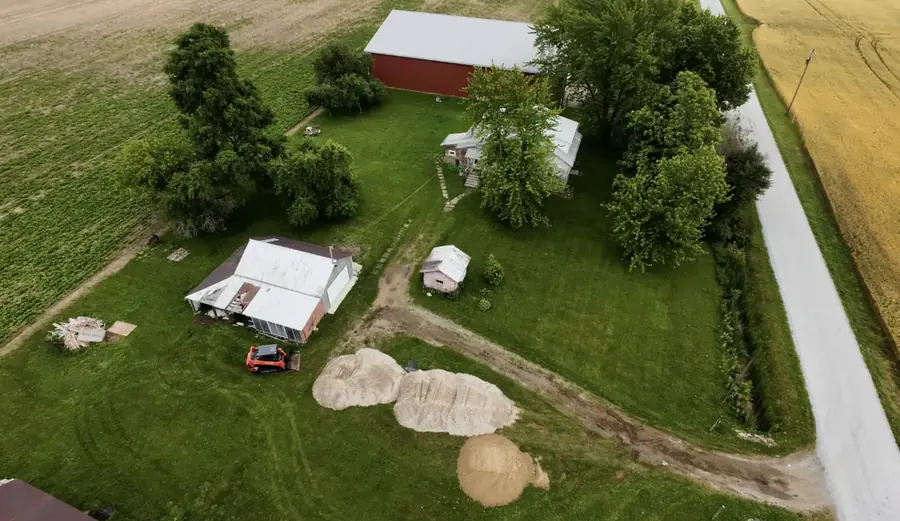
Clay fill for pads and building up grade
Clay is common in this part of Michigan, and clay fill has a real use. When it is placed at the right moisture and compacted, clay holds its shape and makes a firm, low-permeability core. That makes it useful for raising a building site, shaping slopes that need to shed water, and building up the ground under a pole barn pad before stone goes on top.
Clay fill is also unforgiving. Placed too wet, it turns to paste and pumps under equipment. Placed in thick, loose layers, it settles for years. Sandy fill drains better and is easier to work in wet weather but does not hold a slope the same way. Which one fits depends on the job, and on a pad the builder's specification decides what goes under the stone.
Compaction: why it matters for fill
Loose fill dumped in a pile is full of air. Left alone, it settles under its own weight and with every rain, and anything built on it settles too. Compaction squeezes out that air so the fill is as dense as it will get before anything goes on it.
Good practice is to place fill in thin lifts and compact each one before the next goes down, rather than dumping the full depth at once and running a roller over the top. Moisture matters too: fill that is too dry will not bind, and fill that is too wet cannot be packed. Topsoil, by contrast, is normally left looser on purpose so roots can grow, with only light firming before seed. Mixing the two jobs up is how lawns end up hard as a road and pads end up sinking.
Common projects and what to order
A new lawn after construction or regrading for drainage: fill to set the grade if it is low, then screened topsoil over the top for seed. A low spot in the yard that holds water: fill to raise it, topsoil to finish. A pole barn or garage pad: topsoil stripped off, fill placed and compacted, stone on top, built to the builder's numbers. Backfill around a foundation: fill, shaped so water runs away from the walls, with topsoil only at the surface.
Raised garden beds and flower beds are the one place where topsoil, often blended, goes in deep. Anywhere that needs to carry weight, whether a driveway, a shed or a patio, should never sit on topsoil.
Ordering loads without guessing
The most common mistake is ordering by eye. A pile looks enormous in the driveway and then disappears once it is spread, or the opposite happens and the extra has to be moved twice. The amount you need depends on the area, the depth, and how much the material will compact once it is placed.
Measure the area roughly, think about how deep the low spots really are, and be clear about whether you need fill, topsoil or both. Then let the contractor work out the quantity from the site rather than a phone call. It also helps to have the material placed, not just dropped: a load spread where it is needed saves hours with a wheelbarrow and keeps trucks from tearing up the lawn twice.
Getting topsoil and fill delivered and spread
Elite Excavating handles material hauling across St. Clair, Lapeer and Macomb counties from Capac: screened topsoil, sand and fill brought in, and spoil hauled away. Because the loader is already on site, material goes where it is actually needed and gets spread while it is there. For bigger jobs, it ties into residential excavating and grading on the same visit.
Tell us the area and what you are trying to do, and the amount gets worked out at the estimate rather than guessed. George walks the job first and the estimate is free. Call (989) 702-2426.
The Short Version
- Topsoil grows things; fill dirt supports things.
- Screened topsoil spreads clean and is the usual finish for a new lawn.
- Clay fill makes a firm core for pads and grade when placed at the right moisture and compacted in lifts.
- Never build a driveway, pad or patio on topsoil.
- Work out quantities from the site, and have material placed rather than just dumped.
Quick Answers
Can I use fill dirt to grow grass?
Grass struggles in bare fill because it has little organic matter. Use fill to set the grade, then finish with a layer of topsoil for seed.
What is screened topsoil and is it worth it?
It is topsoil run through a screen to remove stones, roots and clumps. For a lawn or seedbed it spreads smoother and saves a lot of raking and picking.
Is clay fill good for a pole barn pad?
Clay fill compacted in lifts at the right moisture makes a firm core, with stone on top. The builder's specification decides the exact build-up.
How do I know how many loads of topsoil to order?
It depends on area, depth and compaction. Tell us what you are covering and the quantity is worked out at the free estimate.
See the material hauling service or call (989) 702-2426.