

Forestry mulching is a good way to open trails, access lanes and food plot openings on wooded or brushy land, because it grinds the growth in place without digging up the ground or leaving brush piles. The work goes well when the routes and openings are planned around high ground, sunlight, cover and how you will keep them open afterward.
Why mulching suits hunting land
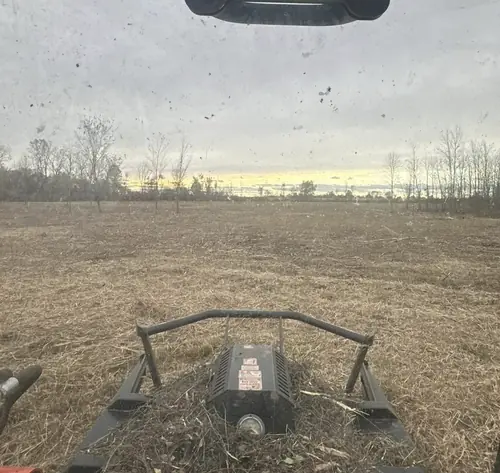
On land you hunt, you usually want openings and paths without stripping the property bare. Forestry mulching does that. It grinds brush and small trees where they stand, leaves the roots holding the soil, and lays a mulch mat on the surface. There are no burn piles to deal with and no trucks rutting the woods.
Because the work is selective, the operator can cut a lane through a thicket and leave the cover on either side, or open a plot and keep the edge trees you want. That control is what makes mulching a good fit for trails and plots. The trails and access lanes side of it is part of our forestry mulching and brush hogging work.
Laying out trails and access lanes
Walk the property before anything is cut and flag the route. Good trails follow the higher, firmer ground and skirt the low spots that hold water, because a lane that is wet half the year turns to ruts the first time a truck or side-by-side uses it. Think about what has to travel the lane: a side-by-side, a tractor with a mower, or a truck hauling a stand.
Plan where the trails lead, too. Lanes to stands and blinds that come in from the side you want, loops that let you check the property without crossing the same ground twice, and an access route for whatever equipment will maintain plots later. If a lane has to cross a wet area or a ditch, that is a question for the agencies covered in our guide to land clearing permits before any crossing is built.
Opening up food plot areas
A plot needs sunlight, so the size and shape of the opening matter. A narrow cut surrounded by tall trees stays shaded much of the day. A wider opening, or one oriented to catch sun, grows better. Odd shapes with bends and points often hunt better than a square, and they keep some of the plot out of sight from the road or the neighbor.
Mulching opens the space, but the ground still needs work before planting. A thick mulch mat on the surface can make it hard to get seed into soil. Plan with the contractor how heavy the mulch should be in the plot area, and how the ground will be worked or allowed to break down before you plant. For what to plant and testing the soil, MSU Extension is a good place to ask.
Keeping cover, edges and oaks
What you leave matters as much as what you cut. Brushy edges, conifer patches and thick bedding cover make the openings useful. Mark them on the walk-through so the machine leaves them alone, and mark any single trees you want kept, such as mast trees along the edge of a plot.
Oaks need extra care. Michigan's invasive species program says not to prune oaks between April 15 and July 15 because oak wilt spreads to fresh wounds in that window, and not to move firewood. If oaks line a trail or plot, plan mulching near them outside that window so bark and limbs are not damaged during the risky months.
Wet ground and water on hunting land
A lot of good hunting ground is near water: low woods, creek bottoms, marshy edges. That is also where the rules are tightest. EGLE regulates wetlands, inland lakes and streams, and floodplains, and its wetland permit page lists grading, bulldozing, removing stumps and digging a pond among examples of work that needs a permit in a wetland.
Keep trails and plots on upland where you can, and if a route or opening has to go near wet ground, call EGLE before the work is planned. Its Wetland Identification Program can review a site on the ground. Staying on firm ground also keeps lanes usable and machines from getting stuck.
Keeping trails and plots open
Once the growth is mulched, it starts coming back from the roots and from seed. A trail or plot that is left alone will close up again. Regular mowing keeps it open, and the sooner after mulching it starts, the easier it stays. Our guide to brush hogging vs forestry mulching explains when a brush hog can take over from the mulcher.
Elite handles the mulching and repeat seasonal cuts, so trails and openings can be put in and kept up by the same crew. George walks the land first and gives a free estimate. Call (989) 702-2426 to set up a walk-through before your next season.
The Short Version
- Mulching opens trails and plots without digging the ground or leaving brush piles.
- Route trails along higher, firmer ground and away from wet spots.
- Give food plots enough opening for sunlight, and plan how the mulch layer is handled before planting.
- Flag cover, edges and keeper trees, and plan oak work outside April 15 to July 15.
- Call EGLE before any work near wetlands, and mow regularly to keep openings open.
Quick Answers
Can I plant a food plot right on top of forestry mulch?
A light layer can be worked with, but a thick mulch mat makes it hard to get seed into the soil. Talk with the contractor about how heavy the mulch should be in plot areas and plan to work the ground or let it break down before planting.
How wide should a hunting trail be mulched?
Wide enough for whatever will use and maintain it, such as a side-by-side, a tractor with a mower or a truck. Mark the route and say what will travel it at the walk-through, and the lane is cut to suit.
Can a mulched trail go through a wet area on my land?
Check with EGLE first. Wetlands in Michigan are regulated, and crossings, fill and grading in a wetland can need a permit. It is usually better to route the trail around wet ground.
When should trails be mulched before hunting season?
Far enough ahead that the work is done and the woods have settled before you hunt, and on firm ground. Call (989) 702-2426 in spring or summer to get on the schedule.
See the brush hogging & mulching service or call (989) 702-2426.