

Yard leveling has no honest single price, because the number depends on how much ground has to move, whether soil is brought in or hauled out, how easily a machine can get in, and what the finished grade has to be ready for. The way to get a real figure is a free on-site estimate, where George walks the yard, looks at the grade and prices the work it actually needs.
How much ground moves
The first thing that sets the price is the amount of dirt that has to move. Smoothing out a bumpy lawn is a light job. Taking out a slope, filling a long low area or reshaping a whole backyard so water runs away from the house is a much bigger one.
Good grading tries to balance the job: high spots are cut and that same soil fills the low spots, so little has to come in or go out. When the yard works out that way, the work is mostly machine time on site. When it does not, because the whole yard is too low or too high, material has to be bought and delivered or loaded and hauled away, and that changes the number. The size of the area matters, but how much the ground changes over it matters more.
Soil brought in or hauled out
If the yard needs building up, the estimate depends on what goes in and how much. Fill dirt is used to raise grade under the surface, and topsoil goes on last so grass has something to grow in. Using topsoil for the whole depth or putting fill on top where grass is meant to grow both cause trouble later, so the mix matters. Our guide to topsoil versus fill dirt explains the difference.
Hauling soil away is the other side of the same question. Spoil from cutting down a high spot, old sod, roots or rubble buried by a previous owner all have to go somewhere. Elite handles both delivery and haul-off with its own equipment, which keeps the job in one set of hands, but the amount of material in or out is still one of the biggest things that moves the price.
Access, fences and what is underground
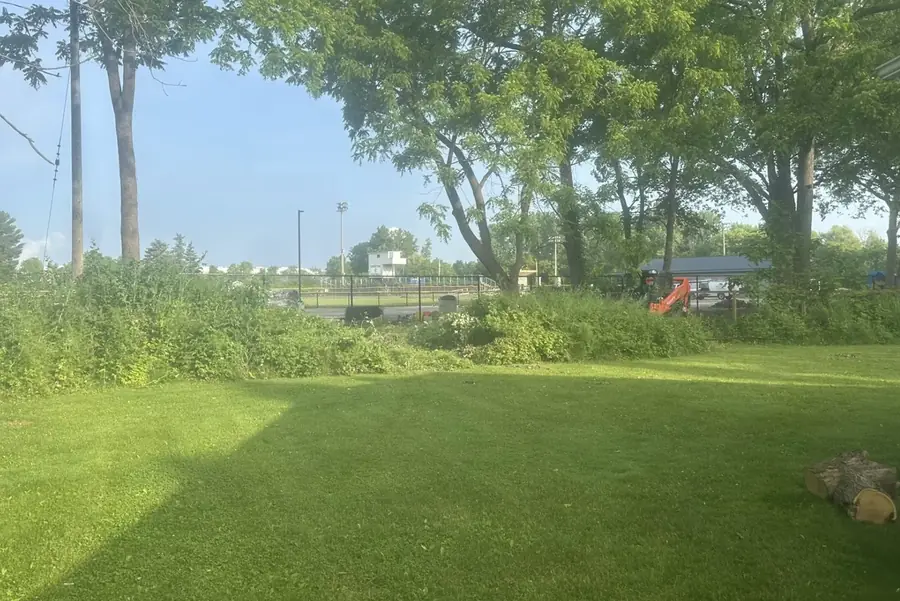
How easily a machine can get to the yard changes the time the job takes. An open backyard with a wide gate is simple. A yard reached between a house and a fence, past a deck, around mature trees or under low wires calls for smaller equipment, more care and sometimes taking down a fence section and putting it back.
What is underground matters as well. Before digging, the contractor or owner contacts MISS DIG 811 to have public utility lines marked. Private lines are not marked by that system: sprinkler lines, a buried feed to a garage or shed, a line to a yard light or a pool. Point those out at the estimate. Working around them slows the job, and finding them by accident costs far more than planning for them.
Drainage shapes the grade
Leveling a yard rarely means making it dead flat. A yard that sheds water needs a gentle fall away from the house and toward somewhere the water can go, such as a swale, a ditch or a low edge of the property. Getting that fall right takes more care than simply smoothing the surface, and it is often the real reason someone calls.
If the yard holds water because of clay, a high water table or nowhere for runoff to go, grading may need to be paired with drainage work. Our guide to yard drainage on clay soil covers the causes, and the guide to French drain installation covers when pipe is needed. Whether the job is grade only or grade plus drainage is one of the biggest things the estimate settles.
The finish: rough grade, final grade and seed prep
How finished the yard needs to be also moves the number. Rough grade gets the shape right; final grade is the smoother, more exact surface that seed or sod goes on. A yard getting new sod needs a finer finish than a back field that will be seeded and left to fill in.
Elite grades and preps the ground for seed or sod, and the seeding itself can be arranged or left to your landscaper. If you are seeding yourself, MSU Extension publishes Michigan lawn care guidance, including when to seed, and it is worth checking before the grading is scheduled so the bare ground is not left open longer than it needs to be. Bare soil on a slope can wash in heavy rain, so timing the finish and the seed together matters.
Ground conditions and the time of year
Michigan clay is easiest to grade when it is dry enough to work and not frozen. In early spring it is often saturated, and running equipment on it can leave ruts and compact the soil, which makes it harder for grass to root. Late in the fall, frozen or half-frozen ground stops fine grading altogether.
That means the season affects both the schedule and the price. A yard that can only be reached across soft lawn may need mats or a wait for drier weather. Spring and fall are the busiest seasons for grading, so getting on the schedule early helps. George will tell you plainly at the estimate if the ground needs to dry out first, rather than promising a date that the weather will not allow.
How to get a real number
The useful information for a yard leveling estimate is simple: the town, roughly how big the area is, what is wrong with it now (bumps, a slope, standing water, a low corner), and what you want it ready for. Photos taken after a heavy rain are especially helpful when water is part of the problem.
From there, George walks the yard, checks the grade and the access, and gives you a number for the work it actually needs, whether that is a day of smoothing or a full regrade. See the grading and land leveling page for the kinds of jobs Elite takes on, from yard grading to final grade before seed. Call (989) 702-2426 for a free estimate around Capac and the St. Clair, Lapeer and Macomb County towns.
The Short Version
- The amount of dirt that moves, not just the yard size, drives the price.
- Soil brought in or hauled out adds material and trucking.
- Tight access, trees and private underground lines slow the work; point them out early.
- A yard that sheds water needs a planned fall, and sometimes drainage as well.
- Dry, unfrozen ground grades most easily; spring and fall book up first.
Quick Answers
Why does leveling a yard cost more when soil has to be brought in?
Because the material has to be bought, trucked in and spread, on top of the machine time. A yard where the high spots can fill the low spots keeps most of the work on site. One that is too low overall needs fill and topsoil delivered, and that is extra material and extra loads.
Can a bumpy lawn be leveled without starting the grass over?
Small dips can sometimes be topdressed a little at a time and the grass grows through. Anything that needs a machine to reshape the ground usually means the surface gets regraded and then reseeded or sodded. The estimate will say which approach fits your yard.
Is yard leveling priced by the hour or by the job?
Elite prices the job after walking it, so you know the number before the work starts. That is more useful to you than an hourly rate, because the amount of soil, the access and the finish all change how long the work takes.
What should I send for a yard leveling estimate?
The town, a rough size of the area, what is wrong with it and what you want it ready for. Photos help, especially after a rain if water is part of the problem. Call or use the contact page, and George will set up a time to walk the yard.
See the grading & land leveling service or call (989) 702-2426.